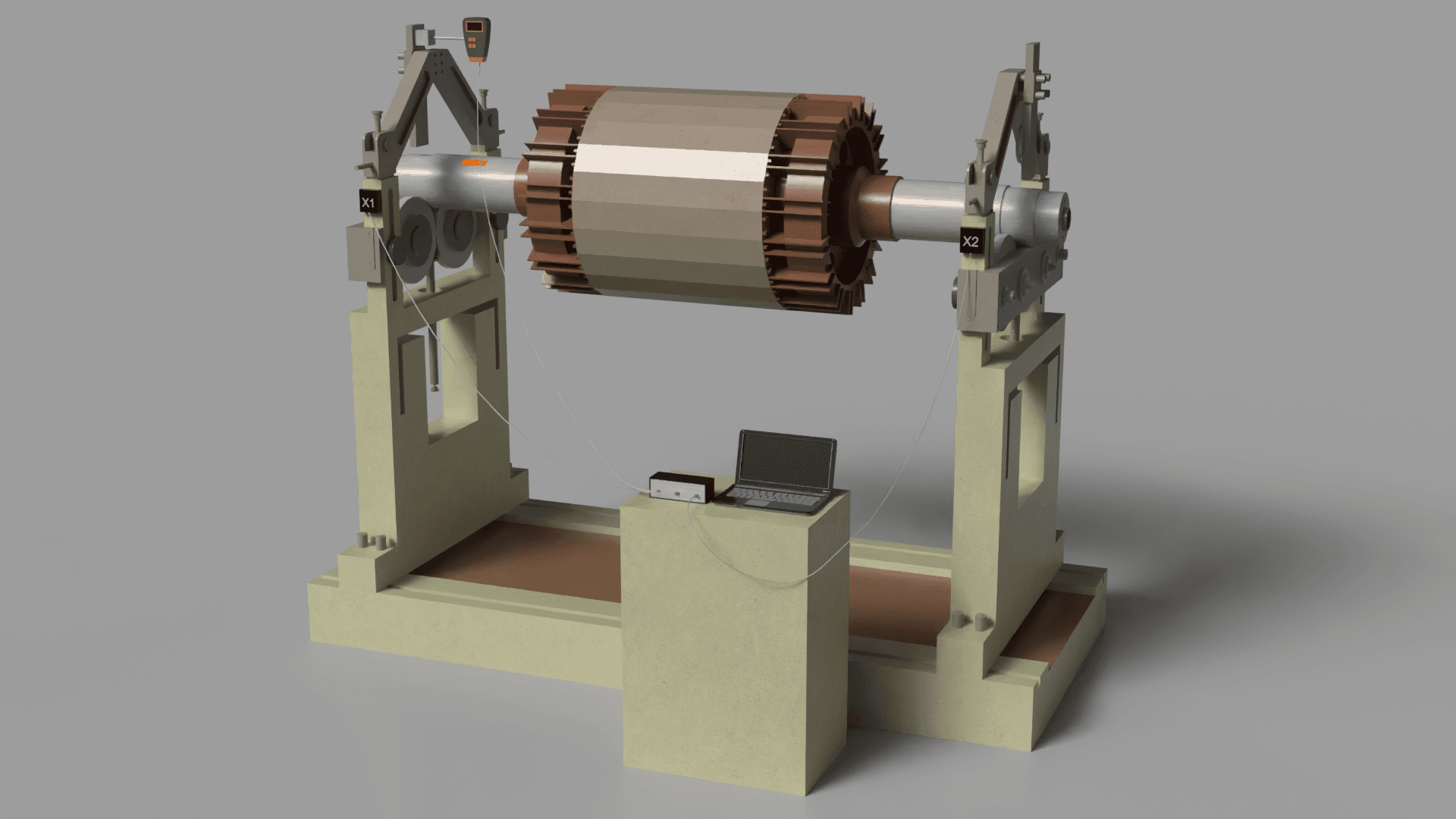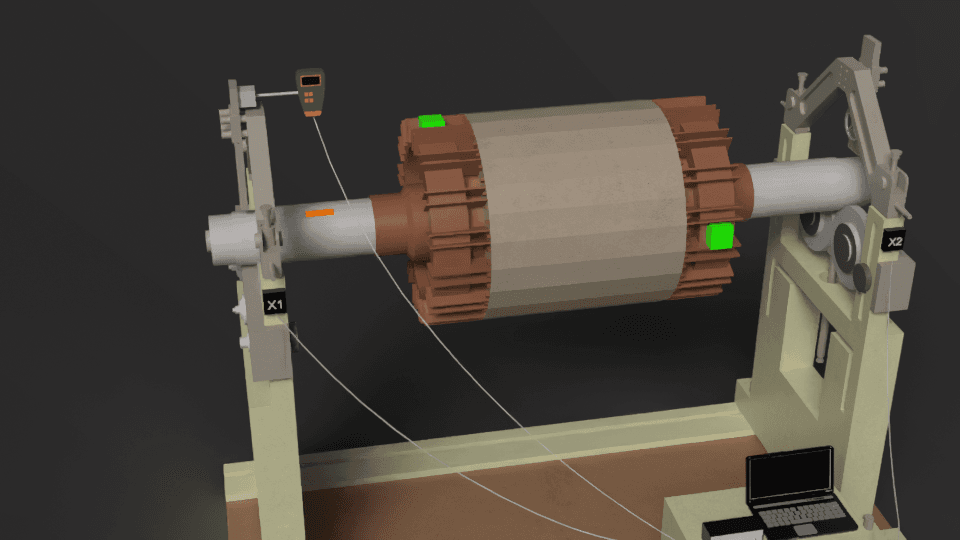
Establish a USB connection between the instrument and the computer, ensuring the software is set up properly.
Mounting the Sensors
Fix the accelerometers securely to the machine's structure in locations where vibrations are most prominent, ideally near the bearings.
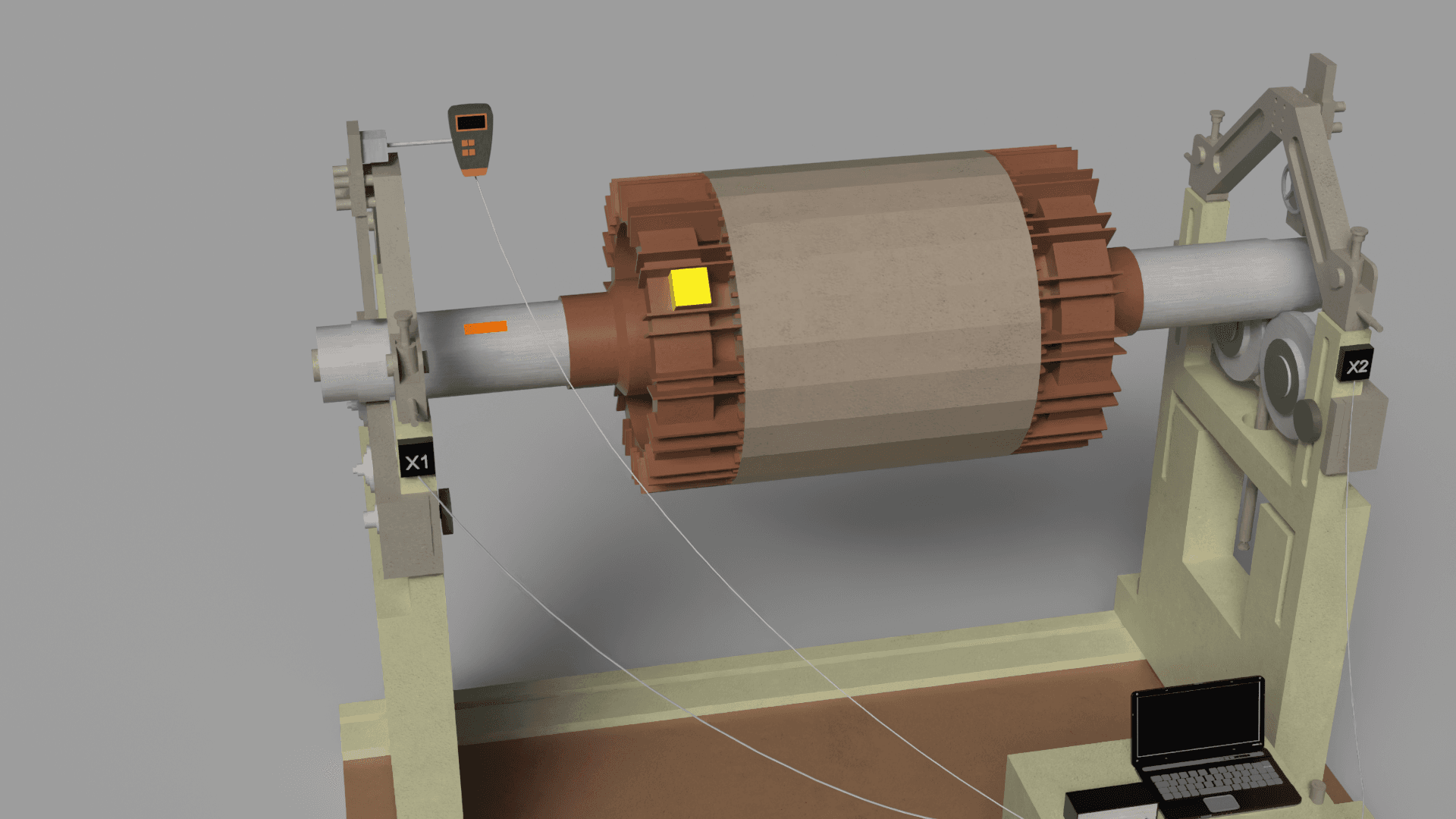
Aim the optical rpm sensor at the rotating shaft and apply a reflective strip to the shaft for phase angle data acquisition.
Software Startup
Open the Balanset application on your PC.
Select the appropriate balancing mode: single-plane or two-plane, depending on the rotor type and your specific requirements.
Measuring Initial Vibration
Run the rotor up to its operating speed.
The program will record the vibration amplitude, rpm, and phase, providing a baseline measurement of the existing imbalance.
Trial Weight Installation
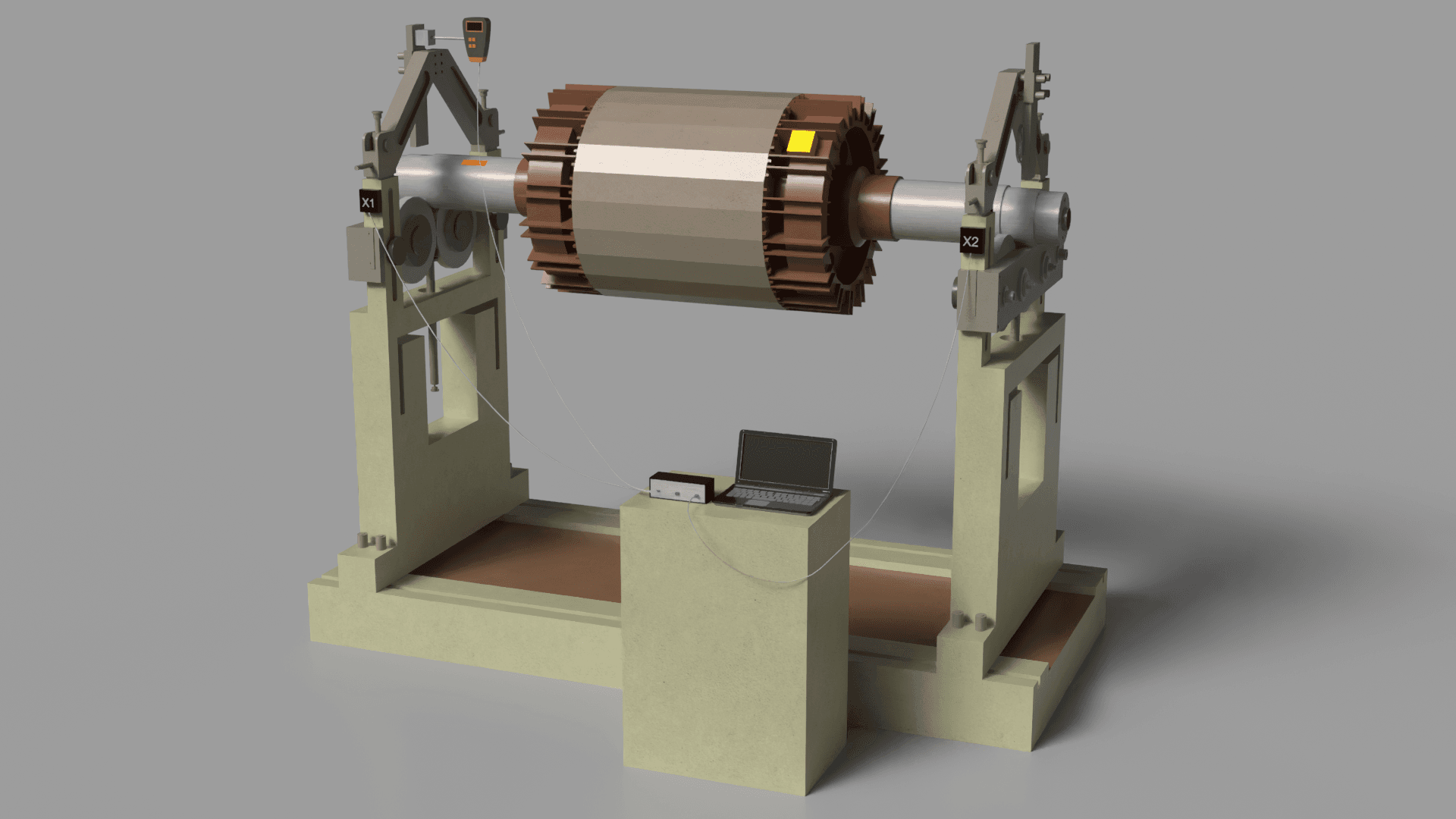
Bring the rotor to a standstill and affix a trial weight at a predetermined point on the rotor, specifying its mass in the software (typically in grams).
Restart the rotor, and the software will record the changes in vibration level and phase angle.
Computing the Compensating Weight
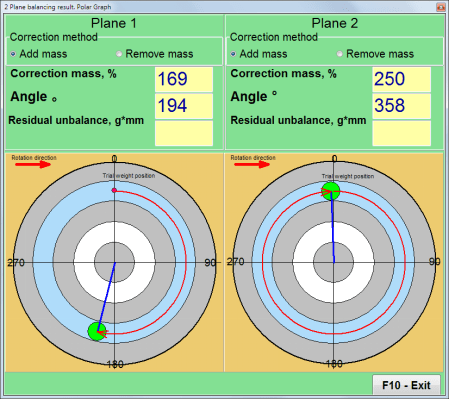
The software uses the measured values to automatically compute the necessary compensating weight's magnitude and placement angle.
The results of the calculation are shown both numerically and visually through charts and graphs.
Installing the Correction Weight
Mount the calculated corrective weight onto the rotor at the specified location and angle.
Periodic checks can be performed to ensure the balancing procedure is effectively reducing the vibration.
Verification and Balancing Completion
After installing the correction weight, run the rotor again and check the residual vibration level.
If the vibration level is within acceptable limits (according to ISO 1940), the balancing is complete.
If the vibration is still outside acceptable limits, reiterate the process and fine-tune the compensating weight.
Report Generation
The balancing results are saved in the software's archive. You can create and print a report containing vibration data, correction weight mass, and its installation angle.
Final Recommendations
Double-check that all weights and sensors are securely fastened.
Check that the rotor's rotation is smooth and free from undue noise or vibration.
If the rotor operates within a larger assembly, check the functionality and interplay of all interconnected parts.